Hidden Mold: How to Tell If Your Utah County Home Has a Problem
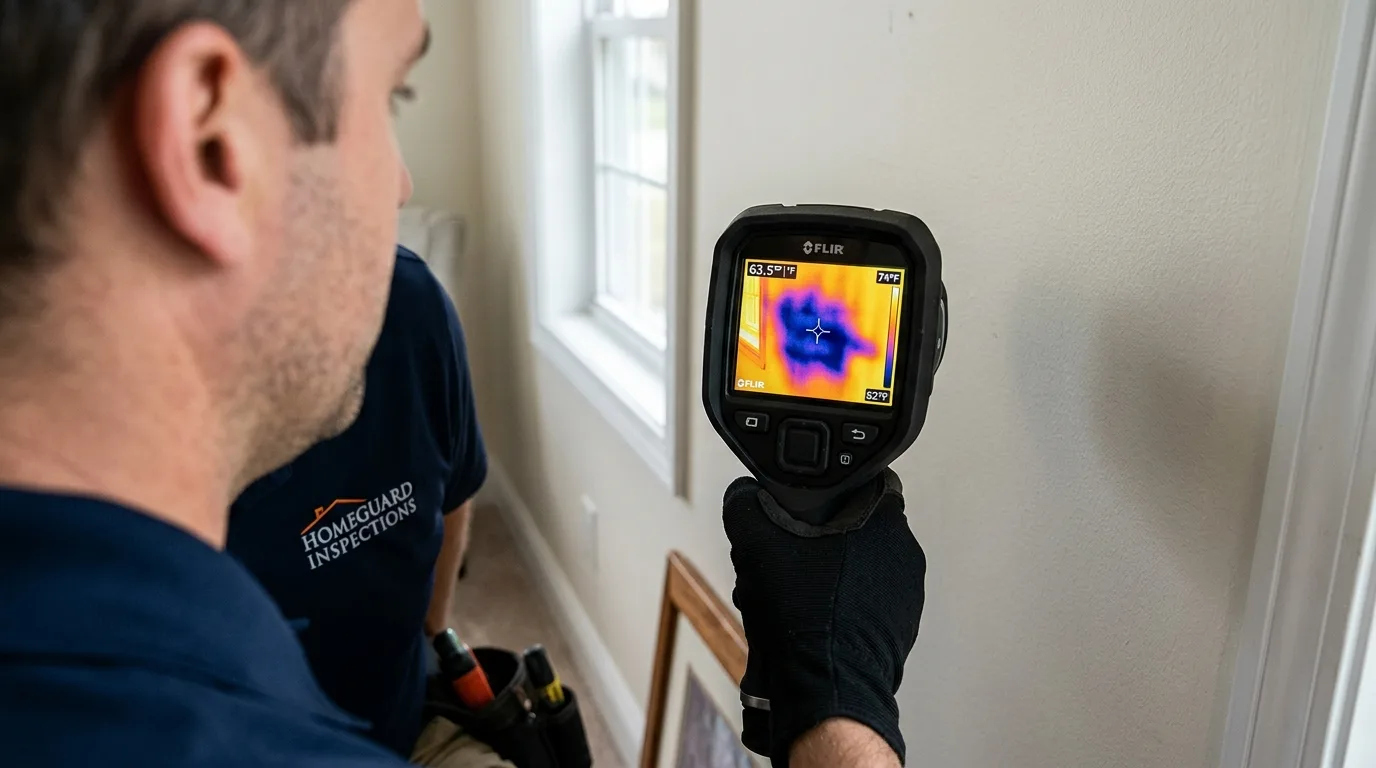
Most mold inspections happen after someone has been smelling something musty for months — by which point the mold problem is significantly larger than it would have been if investigated at the first sign. In Saratoga Springs, where clay-rich Lake Bonneville soils create persistent foundation moisture conditions that can feed hidden mold growth throughout the year, recognizing the early warning signs before visible growth appears is genuinely valuable. In this post, we cover what hidden mold looks like in Utah County homes, where it grows most reliably, and when a professional inspection is warranted.
Suspect Hidden Mold in Your Saratoga Springs Home? Get a Free Assessment
We use thermal imaging and air sampling to find mold that visual inspection misses. Call (877) 698-1311.
Why Hidden Mold Is Particularly Common in Saratoga Springs
The paradox of Saratoga Springs mold risk is that the semi-arid climate (just 13.47 inches of annual precipitation) creates a false sense of security. Surface areas dry quickly in Utah’s low-humidity air — but materials that absorbed water and were enclosed within wall or floor assemblies may remain moist indefinitely, supporting mold growth that has no path to evaporate.
The Lake Bonneville clay deposits that underlie neighborhoods from Northshore to Brixton Park maintain persistent moisture against foundation walls year-round. Concrete and concrete block absorb this moisture slowly and transmit it into the base of drywall, insulation, and wood framing. In a finished basement, this process produces mold inside wall cavities while the painted drywall surface looks and feels perfectly dry. You can’t see it, can’t feel it — but it’s there and actively producing spores that recirculate through the home’s HVAC system.
Warning Sign 1: Musty Odor Without a Source
A musty, earthy smell that you can’t locate is the single most reliable indicator of hidden mold in Utah County homes. Mold produces volatile organic compounds (VOCs) as metabolic byproducts — these are what create the characteristic odor. The smell is present even before visible growth appears and persists regardless of how well the space is ventilated, because the source is inside a wall or floor cavity that doesn’t respond to surface airflow.
The specific odor characteristics that indicate mold versus other odors: it’s consistently present rather than intermittent, it’s strongest in certain areas of the room (indicating proximity to the source), and it’s often more noticeable in the morning before the home has been occupied and ventilated for the day.
Warning Sign 2: Health Symptoms That Improve When Away From Home
Mold spores and MVOCs (microbial volatile organic compounds) circulate through indoor air continuously in a mold-affected building. Exposure symptoms vary by individual sensitivity but commonly include:
- Nasal and sinus congestion or discharge
- Respiratory irritation — coughing, wheezing, throat irritation
- Eye irritation — redness, watering, sensitivity to light
- Headaches that are present on waking and improve by late morning (after leaving home)
- Fatigue that doesn’t correspond to sleep quality
The critical diagnostic test: symptoms consistently improve when you leave home for several days (vacation, work travel) and return when you come back. This pattern in multiple household members is strong evidence of a building-related exposure — mold being the most common cause.
Health Symptoms Improving Away From Home? It Might Be Mold
Saratoga Springs Water Damage Restoration provides professional mold assessment using IICRC-standard air sampling. Call (877) 698-1311.
Warning Sign 3: Discoloration or Staining at Baseboard Level
Brown or grayish discoloration along the bottom of drywall — particularly in basements and lower-level spaces in Saratoga Springs — indicates moisture wicking up through the drywall from the base. This is the visible surface manifestation of clay-soil moisture migration entering through the concrete foundation floor or wall. The discoloration itself is mineral deposits and organic material that support mold growth inside the drywall paper facing.
This sign is often dismissed as “just a stain” or painted over, which solves the appearance problem for months but does nothing about the moisture source or the mold that’s actively growing in the gypsum core behind the paper facing.
Warning Sign 4: Seasonal Patterns in Humidity or Odor
Mold problems driven by seasonal moisture sources often follow predictable patterns. A musty smell that intensifies in April and May (during Saratoga Springs’s spring snowmelt season) and again in August (during monsoon season) suggests a moisture source that’s seasonally driven — clay-soil hydrostatic pressure, window well overflow, or drainage system stress during these peak moisture periods.
Track when symptoms are worst and when the odor is strongest. If the pattern correlates with Saratoga Springs’s seasonal water events — spring snowmelt, summer monsoons, winter freeze events — the moisture source and corresponding mold growth are almost certainly connected to that seasonal pattern.
Warning Sign 5: Prior Water Events That Were Not Professionally Dried
This is the highest-risk indicator, and it affects thousands of Saratoga Springs homeowners who experienced flooding or pipe failures in recent years. If your home had a water event — flooding, burst pipe, appliance failure — and the drying was not performed by professionals using industrial equipment with daily moisture monitoring, there is significant probability of hidden mold in the affected areas.
Consumer-grade fans and dehumidifiers do not achieve the drying conditions required to eliminate mold risk in structural materials. Homes dried this way often show no visible mold initially but develop hidden growth within 4–12 weeks as moisture levels slowly decline toward conditions that support mold establishment rather than mold prevention. See our guide on mold prevention after water damage for why professional drying protocols matter.
Where Hidden Mold Is Most Common in Saratoga Springs Homes
Behind finished basement walls: Clay-soil moisture migration through foundation walls produces mold in the insulation, drywall backing, and wood framing directly adjacent to the wall, even when the surface looks fine.
Under first-floor hardwood or LVP flooring: Subfloor moisture from inadequate vapor barriers or slab moisture vapor emission grows mold in the space between flooring and subfloor — the mold feeds on the adhesive and backing materials.
Inside HVAC system ductwork: Water damage events that affect areas near HVAC ducts introduce mold spores into the duct system, where mold can colonize interior duct liner and be continuously distributed through the home.
In crawl space framing: Homes with crawl spaces — more common in older Saratoga Springs construction — show mold on the underside of first-floor framing when crawl space vapor barriers are absent or have failed.
Behind kitchen and bathroom vanity walls: Slow supply line drips create persistent moisture in enclosed cabinet and vanity areas that’s particularly well-suited to mold growth.
When to Get a Professional Mold Inspection
Call for a professional inspection when:
- You smell mold but can’t locate a source
- You have health symptoms correlating with home occupancy
- There was a prior water event that was dried with consumer equipment
- You’re purchasing or selling a Saratoga Springs property and want to verify condition
- A lender or insurer has requested mold testing as a condition of the transaction
- You see any of the early visual signs described above
Professional mold inspection in Saratoga Springs uses IICRC-standard air sampling (spore trap samples) and surface swab or tape lift samples where visual mold is suspected. Air sampling is the most reliable method for detecting hidden mold because it captures what’s actually in the air you’re breathing, not just what’s visible on surfaces. See our mold remediation services for what happens after a positive finding.
Frequently Asked Questions
Can I test for mold myself without a professional inspection in Saratoga Springs?
Consumer mold test kits that use petri dishes to collect airborne spores exist but have significant limitations — they don’t quantify spore levels, identify species, or distinguish between normal background mold levels and problematic concentrations. They can produce false reassurance. For a definitive mold assessment, professional air sampling with laboratory analysis is required.
Does homeowners insurance in Utah cover mold remediation?
Standard homeowners policies in Utah cover mold remediation when the mold results from a covered water damage event — a burst pipe, an appliance failure. Mold from gradual moisture intrusion, foundation seepage, or events that occurred years ago is typically not covered. The connection between the mold and a specific covered event must be demonstrable. We provide documentation that establishes this connection when applicable.
How long does it take for mold to become a health risk after water damage in Utah County?
Mold begins colonizing water-damaged materials within 24–48 hours and produces spores within days to weeks depending on temperature and moisture conditions. Health effects from exposure depend on individual sensitivity — some people react quickly to even moderate spore levels; others tolerate higher levels without obvious symptoms. In Saratoga Springs, where clay-soil moisture creates ongoing rather than resolved moisture conditions, mold exposure potential increases with time if the underlying moisture source is not addressed.
Found Hidden Mold in Your Utah County Home? We Can Help
IICRC-standard mold assessment and remediation in Saratoga Springs and all of Utah County. Call (877) 698-1311.
Related: