Complete Guide: Basement Flood Cleanup in Utah County
Most Utah County homeowners discover a flooded basement the same way: they open the door at the top of the stairs and know something is wrong before they even flip on the light. The water is there — sometimes an inch, sometimes a foot — and the question shifts instantly from “why did this happen” to “what do I do right now.” Basement flood cleanup in Utah County follows a defined sequence where every hour of delay meaningfully increases total damage and mold risk. This guide covers the first-response actions that determine how much is recoverable, what professional cleanup actually involves, and the mistakes that turn manageable events into five-figure projects.
Basement Flooding in Utah County? We Respond Within 90 Minutes
24/7 emergency basement flood cleanup for Saratoga Springs and all of Utah County. Call (877) 698-1311.
Why Utah County Basements Flood
The geology and climate of Saratoga Springs and surrounding Utah County create conditions that make basement flooding a recurring pattern for thousands of homeowners — not a freak event.
The Lake Bonneville clay deposits underlying neighborhoods like Northshore and Wander absorb water slowly but hold it for extended periods, maintaining elevated hydrostatic pressure against foundation walls long after a storm or snowmelt event ends. A basement that stays dry during a rain event may show water intrusion two or three days later as pressure builds in the saturated clay and forces water through foundation cracks, window well gaps, and floor-wall joints.
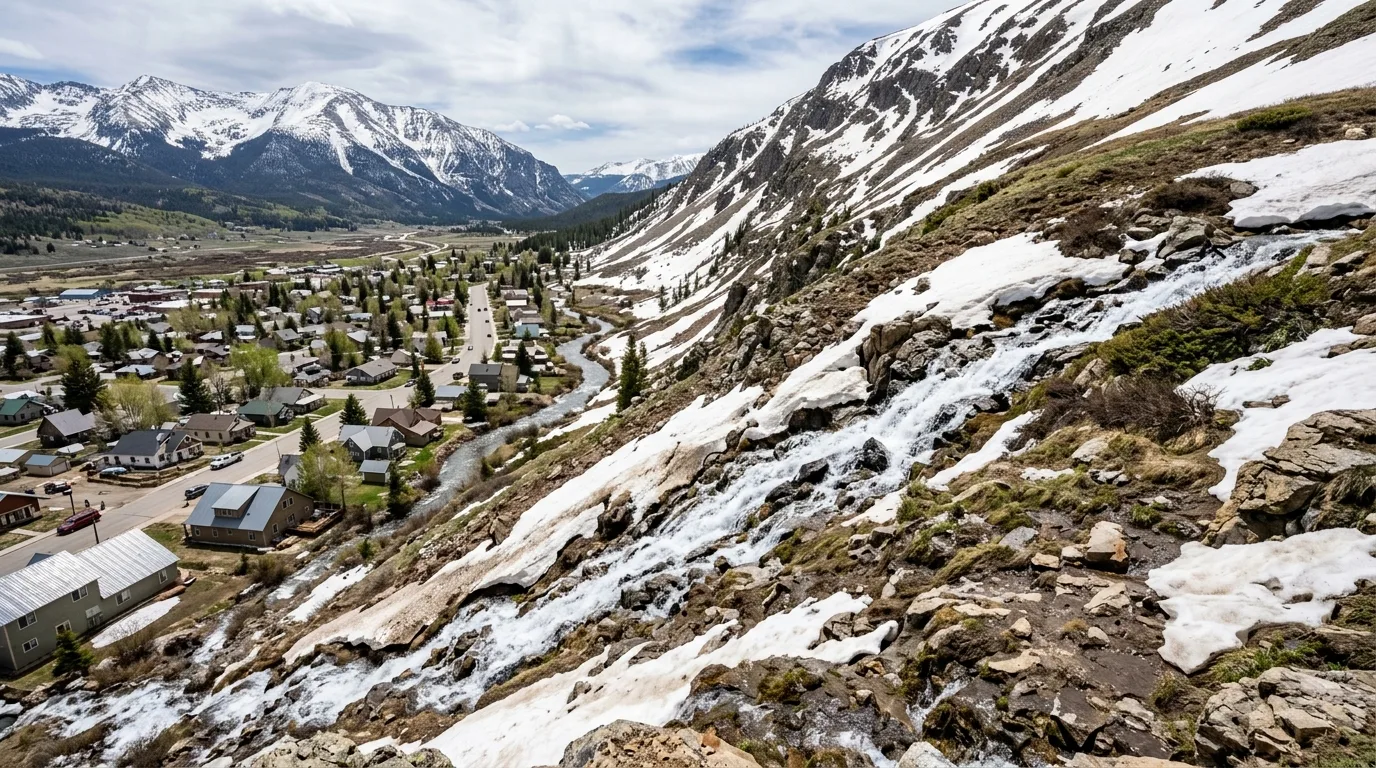
Seasonally, the spring snowmelt period from March through May represents the highest-risk window for basement flooding across Utah County. Lake Mountains snowpack releases water faster than clay-heavy soils absorb it, producing weeks of ground saturation that strain sump pumps, overwhelm window wells, and test every waterproofing system simultaneously. The North American Monsoon from July through September brings a second risk period — intense afternoon storms that drop over an inch of rain in under an hour on soils with no remaining absorption capacity. For a full breakdown of the seasonal flooding cycle in Saratoga Springs, see Spring Snowmelt Flooding in Saratoga Springs: What Homeowners Need to Know.
The First 60 Minutes After Basement Flooding
Speed in the first hour determines whether you have a water extraction and drying project or a drying-plus-full-mold-remediation project. These are the actions that matter:
Turn off electricity to the affected area before entering. Standing water and live circuits create an immediately life-threatening hazard. Locate your breaker panel and cut power to the basement entirely before anyone enters. If the panel is in the flooded basement, call an electrician and wait.
Identify the water source and stop it if possible. Interior sources — burst pipe, appliance failure, sump pump discharge line disconnection — can often be stopped by shutting off the main water supply. Exterior sources like window well overflow, foundation seepage, and sewer backup through floor drains cannot be stopped at the source but can be managed by moving items out of the water’s path.
Document before touching anything. Photographs of water level, all visible entry points, and affected contents are required for your insurance claim. For a full breakdown of what documentation your carrier expects, see The Cost of Water Damage Restoration in Saratoga Springs.
Call a professional water extraction company. Consumer wet-dry vacuums remove small amounts of standing water; industrial truck-mounted extraction equipment removes thousands of gallons per hour. The difference between these tools determines whether structural drying begins within hours or days — and every hour of delay raises the probability of mold establishing in structural materials.
What Professional Basement Flood Cleanup Looks Like
Professional basement flood cleanup in Utah County follows the sequence established in the IICRC S500 Standard — the framework used by certified water mitigation companies throughout Saratoga Springs.
Water extraction: Industrial extraction equipment removes standing water at rates consumer tools cannot approach. A professional team can clear a flooded basement in a fraction of the time it takes a wet-dry vacuum, starting the drying clock hours earlier.
Moisture detection: After visible water is removed, finding hidden water begins. Thermal imaging cameras detect moisture inside wall cavities and under flooring surfaces that surface meters miss entirely. In Utah County’s clay-soil conditions — where moisture migrates through foundation materials and into wall assemblies — this step is not optional. Moisture that is not found is not dried, and moisture that is not dried produces mold. See our post on hidden mold warning signs in Utah County to understand where concealed moisture typically establishes.
Structural drying and dehumidification: Industrial air movers and commercial dehumidifiers create airflow conditions that extract moisture from structural materials at the rates needed to prevent mold colonization. Daily monitoring with calibrated moisture meters tracks progress toward IICRC S500 target levels. Consumer fans and residential dehumidifiers do not achieve the airflow and humidity extraction capacity required — homes “dried” with consumer equipment frequently show mold four to eight weeks later.
Material decisions: Based on the water damage category — Category 1 (clean), Category 2 (gray), or Category 3 (sewage or outdoor floodwater) — decisions are made about which materials can be dried in place versus must be removed. Category 2 and 3 events require more aggressive material removal than clean supply-line water events.
Documentation for insurance: Moisture readings, equipment deployment logs, and photographs are compiled in a format suitable for insurance claim submission. Our water damage restoration services include this documentation as a standard part of every project.
Get a Free Basement Flood Assessment in Utah County
IICRC-certified water mitigation and basement drying for Saratoga Springs homeowners. Call (877) 698-1311.
Common Mistakes That Make Basement Flood Damage Worse
Waiting for the insurance adjuster before starting cleanup. Most Utah policies require prompt mitigation — and mold establishes in wet materials within 24–48 hours. Waiting for adjuster authorization before beginning extraction extends the damage window and may complicate your claim. Emergency services can begin immediately; notify your insurer within hours but do not delay extraction.
Using consumer drying equipment and calling it done. The most expensive mistake in Utah County basement flooding is treating a wet-dry vacuum and rental fans as equivalent to professional drying. Structural materials retain moisture long after surface areas feel dry, and the conditions needed to extract that deep moisture require industrial dehumidification capacity. This is how homes pass a visual inspection in week one and show mold colonies in week six.
Discarding evidence before documentation. Damaged contents — flooring samples, sections of drywall, insulation materials — may be required for insurance substantiation. Photograph everything before any disposal.
Assuming the water source determines coverage. Water entering from outside the home through window wells, foundation cracks, or rising groundwater is flood damage — excluded from standard homeowners insurance without a separate flood policy. Sewer backup through a floor drain requires a sewer backup endorsement. Understanding source and pathway before filing the claim prevents coverage disputes.
How Long Does Basement Flood Cleanup Take?
Timeline depends on flooding extent, water category, and how quickly professional equipment was deployed.
Category 1 with rapid response: Extraction begins within two to four hours, structural drying runs three to five days, reconstruction follows moisture confirmation. Total from flooding to completed restoration: one to three weeks depending on reconstruction scope.
Category 2 or delayed response: Material removal adds one to two days. Drying extends to five to seven days. Reconstruction timeline follows. Total: two to four weeks.
Category 3 (sewage or outdoor floodwater): Full biohazard protocols, mandatory porous material removal, post-cleanup clearance testing required. Drying phase: seven to ten days. Total project: three to five weeks before reconstruction is complete.
Preventing a Repeat Basement Flood in Saratoga Springs
Cleanup addresses the current event. Preventing the next one means addressing the underlying vulnerability:
- Install a battery-backup sump pump — power outages during severe Utah County storms are common, and a primary pump without battery backup fails exactly when it’s needed most
- Add bubble covers to window wells — the single highest-impact intervention for preventing spring and summer basement flooding entry in Saratoga Springs
- Extend downspouts at least six feet from the foundation — short downspouts deposit roof drainage at the foundation wall during every storm
- Restore positive grading — settled soil along foundation perimeters channels water toward the house; correcting grade slope before spring snowmelt is the lowest-cost prevention step available
Frequently Asked Questions
How much does basement flood cleanup cost in Utah County?
Costs range from $500 for minor events addressed quickly to $10,000 or more for major flooding with material removal and reconstruction. The primary cost drivers are affected square footage, water category, and whether reconstruction is required. Category 3 events with biohazard protocols run significantly higher than Category 1 events of the same size. For a detailed breakdown by scenario, see the water damage restoration cost guide for Saratoga Springs.
Is basement flooding covered by homeowners insurance in Utah?
Coverage depends on the water source. Water from a burst pipe or appliance failure inside the home is covered by standard homeowners insurance in Utah County as a sudden, accidental event. Water that entered from outside — through window wells, foundation seepage, or rising groundwater — is flood damage and requires separate flood insurance. Sewer backup through a floor drain requires a sewer backup endorsement, which is not included in most standard Utah policies by default.
Can I clean up a flooded basement myself in Utah County?
For very small Category 1 events addressed within one to two hours of onset, homeowner cleanup may be manageable. For any event involving gray water (washing machine overflow, sump pump failure) or sewage, and for any event that sat for more than a few hours, professional cleanup is strongly recommended. The mold risk from inadequate drying and the health risk from Category 2 or 3 water make DIY cleanup in those scenarios a significant liability.
Professional Basement Flood Cleanup Across Utah County
Saratoga Springs Water Damage Restoration — IICRC-certified, insurance-experienced, available 24/7. Call (877) 698-1311.
Related: