Mold After Water Damage: Why 48 Hours Matters in Utah's Climate
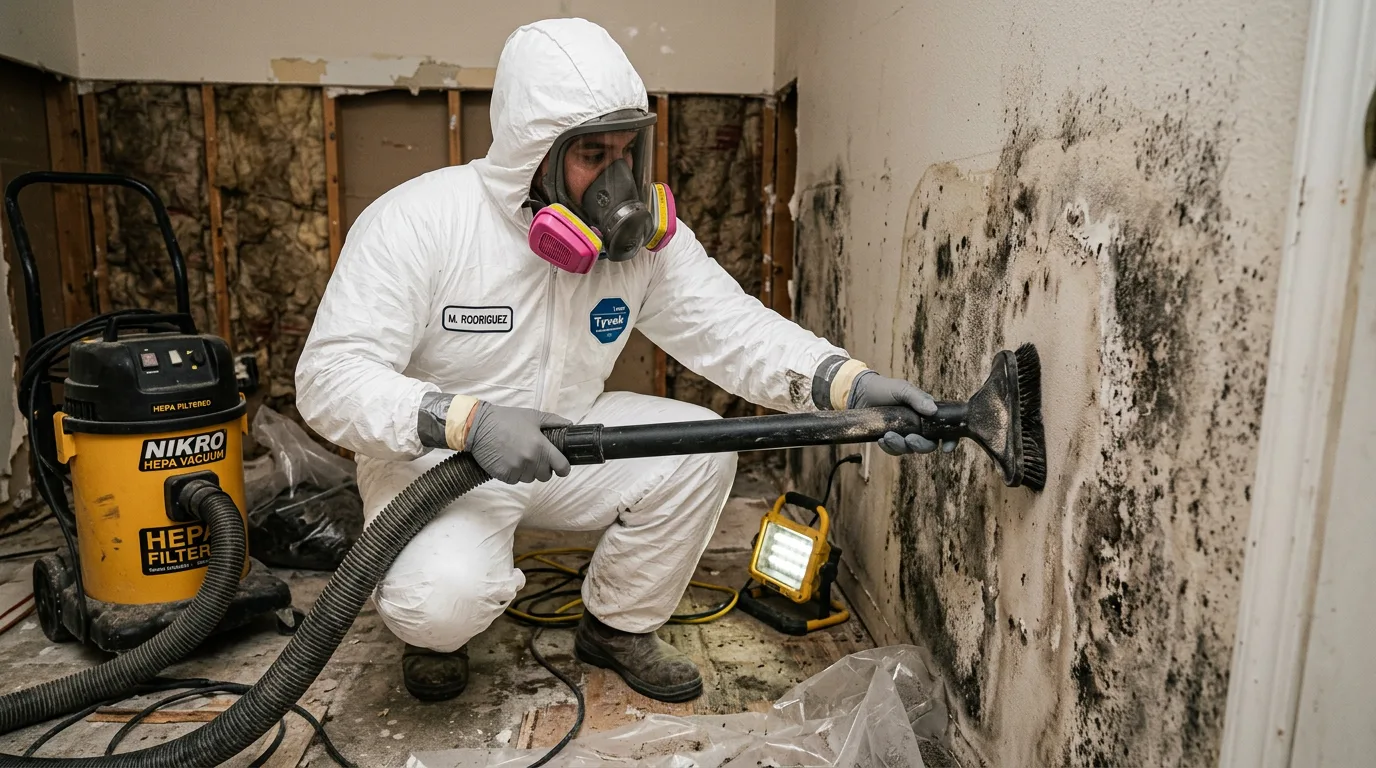
Forty-eight hours. That’s the window between “water damage that can be dried” and “water damage that also requires mold remediation.” In Saratoga Springs, where Lake Bonneville clay soils maintain ambient moisture levels that complicate structural drying, that window can be even narrower for homes in lower-elevation neighborhoods near Utah Lake. In this post, we cover how mold grows after water damage, why Utah County’s specific conditions affect the timeline, and what professional drying standards actually prevent mold from establishing.
Water Damage in Saratoga Springs? Don't Let It Become a Mold Problem
24/7 emergency extraction and professional drying to prevent mold in Utah County homes. Call (877) 698-1311.
How Mold Grows After Water Damage
Mold is everywhere — spores float through indoor and outdoor air constantly. Under normal dry conditions, these spores don’t establish growth because they lack the moisture necessary for germination. When water damage creates sustained moisture in porous materials — drywall, wood framing, insulation, carpeting — the conditions for mold colonization are created.
The 24–48 hour window is the period between initial wetting and visible surface mold growth. What makes this window meaningful is that mold doesn’t need to be visible to be present — spores begin germinating and producing mycelia within hours of contacting wet porous materials. By the time you can see mold at 48–72 hours, it has already established a root system in the material that cannot be cleaned from the surface — the material must be removed.
This is why the IICRC S500 standard requires category classification of water damage: Category 1 (clean water) gives restoration professionals the most flexibility in drying timelines; Category 2 (gray water) narrows the window for material retention decisions; Category 3 (black water/sewage) requires removal of all contaminated porous materials regardless of how quickly restoration begins.
Why Utah County’s Climate Affects the Mold Timeline
Saratoga Springs’s semi-arid climate — just 13.47 inches of annual precipitation — creates a counterintuitive impression that mold risk is low. In reality, the local climate creates specific conditions that affect mold growth patterns in two distinct ways.
First, the Lake Bonneville clay soils that underlie the Wildflower and Northshore neighborhoods function as a moisture reservoir that continuously reintroduces water vapor into the drying environment. Even when surface water has been extracted and air movers are running, moisture migrates from saturated clay adjacent to foundation walls back into structural materials — particularly in basement and crawl space environments. This moisture reintroduction is why professional moisture monitoring throughout the drying period is essential in Saratoga Springs: materials that appear dry at the end of day two may show elevated moisture again on day three.
Second, Utah’s summer temperatures — with July highs averaging 94°F — create warm indoor conditions after summer flooding that accelerate mold growth significantly. The same warm temperatures that make Saratoga Springs summers pleasant also make water-damaged basements and first floors particularly hospitable to mold after summer monsoon flooding.
Water Damage Can Become Mold Damage in 48 Hours — Call Now
Professional extraction and drying in Saratoga Springs prevents mold from establishing. We respond around the clock. (877) 698-1311.
What Professional Drying Actually Does to Prevent Mold
Consumer drying approaches — running household fans and opening windows — do not meet the moisture removal standards required to prevent mold in structural materials. Here’s why the difference matters.
Industrial air movers operate at many times the airflow capacity of household fans and are positioned specifically to create the evaporation conditions needed to draw moisture out of structural materials — not just circulate humid air. Commercial dehumidifiers operating in the same space then process the evaporated moisture and extract it from the air. Together, this equipment reduces the relative humidity in the space below the threshold at which mold can establish growth, while also driving moisture out of structural materials rather than just moving air over surfaces.
The key metric is the grain depression — the difference in moisture content between inlet air and outlet air from the dehumidifier. Professional-grade equipment produces grain depressions that make genuine drying possible; consumer-grade equipment does not. This isn’t a marketing distinction — it’s the physical difference between conditions where mold grows and conditions where it cannot.
Practical Uses: Mold Prevention for Different Saratoga Springs Homeowners
-
Homeowners with basement flooding after spring snowmelt: The combination of cool temperatures and Lake Bonneville clay soil moisture reintroduction makes spring flooding particularly mold-prone. Professional drying should begin within hours of extraction, not after the adjuster visits.
-
Homeowners with burst pipe damage from January freeze: Burst pipe water rapidly penetrates wall cavities, creating enclosed wet environments ideal for mold. Thermal imaging inspection of all walls adjacent to the pipe failure is essential — mold established inside wall cavities before reconstruction begins creates a persistent hidden problem.
-
Homeowners in Northshore and Wander near Utah Lake: Higher ambient moisture from lake proximity and saturated clay soils near the water table means extended drying times. Plan for 5–7 days of professional drying rather than the standard 3–5 day estimate.
-
Homeowners discovering water damage weeks after an event: Mold remediation is required before any reconstruction in this scenario. See our mold remediation services for the IICRC-standard process.
-
Homeowners managing their own restoration: If a water event is contained (small area, quickly addressed), personal monitoring of moisture levels with a calibrated moisture meter every 24 hours can help confirm adequate drying. Any reading above 15% moisture content in wood materials or 1% in drywall indicates conditions that support mold growth.
How to Identify Whether Mold Is Present After Water Damage
Visible mold: Fuzzy growth in colors ranging from white to black on walls, flooring, or structural materials is the obvious indicator. Any visible mold growth larger than 10 square feet requires professional remediation per EPA guidelines.
Musty odor: A persistent musty smell without visible mold indicates mold growth in a location you can’t see — inside wall cavities, under flooring, in crawl space areas. This is extremely common in Saratoga Springs after spring flooding events where professional drying was delayed or inadequate.
Health symptoms that improve away from home: Respiratory irritation, allergy symptoms, headaches, and fatigue that consistently improve when you leave the house are classic signs of mold exposure. Symptoms in multiple occupants are particularly significant.
Discoloration without texture: Mold in early stages may appear as flat discoloration — gray or greenish — rather than fuzzy growth. This stage still requires professional assessment to determine whether active mold growth is present.
For a comprehensive guide to finding hidden mold in your home, see our post on hidden mold in Utah County.
Frequently Asked Questions
How long does mold prevention actually take after water damage in Saratoga Springs?
Professional mold prevention — complete structural drying with industrial equipment — takes 3–5 days for most water damage events in Saratoga Springs. Properties near Utah Lake in areas like Northshore and Wander may take 5–7 days due to clay-soil moisture conditions. The timeline is driven by moisture readings, not the calendar — reconstruction should not begin until all structural materials show moisture content at acceptable levels confirmed by calibrated instruments.
Can mold grow in Saratoga Springs even in dry weather?
Yes — ambient outdoor humidity doesn’t determine whether mold grows inside structural materials. What matters is the moisture content of the materials themselves. Lake Bonneville clay soils maintain persistent moisture against foundation walls throughout the year in Saratoga Springs, creating conditions for mold growth in basements and crawl spaces even during dry fall months. Interior humidity from cooking, showering, and breathing also contributes to indoor moisture levels year-round.
If I don’t see mold after water damage, does that mean it’s not there?
Not necessarily. Mold growth inside wall cavities, under flooring, and in crawl spaces is extremely common after water damage events in Saratoga Springs and typically isn’t visible from finished surfaces. Professional moisture monitoring after restoration confirms that drying was complete. If drying was not performed professionally, a mold inspection 4–8 weeks after the water event is a reasonable precaution.
Water Damage Without Professional Drying Means Mold Risk
Saratoga Springs Water Damage Restoration prevents mold with industrial drying and daily moisture monitoring. Call (877) 698-1311.
Related: