Summer Storm Prep: Protecting Your Saratoga Springs Home from Flash Floods
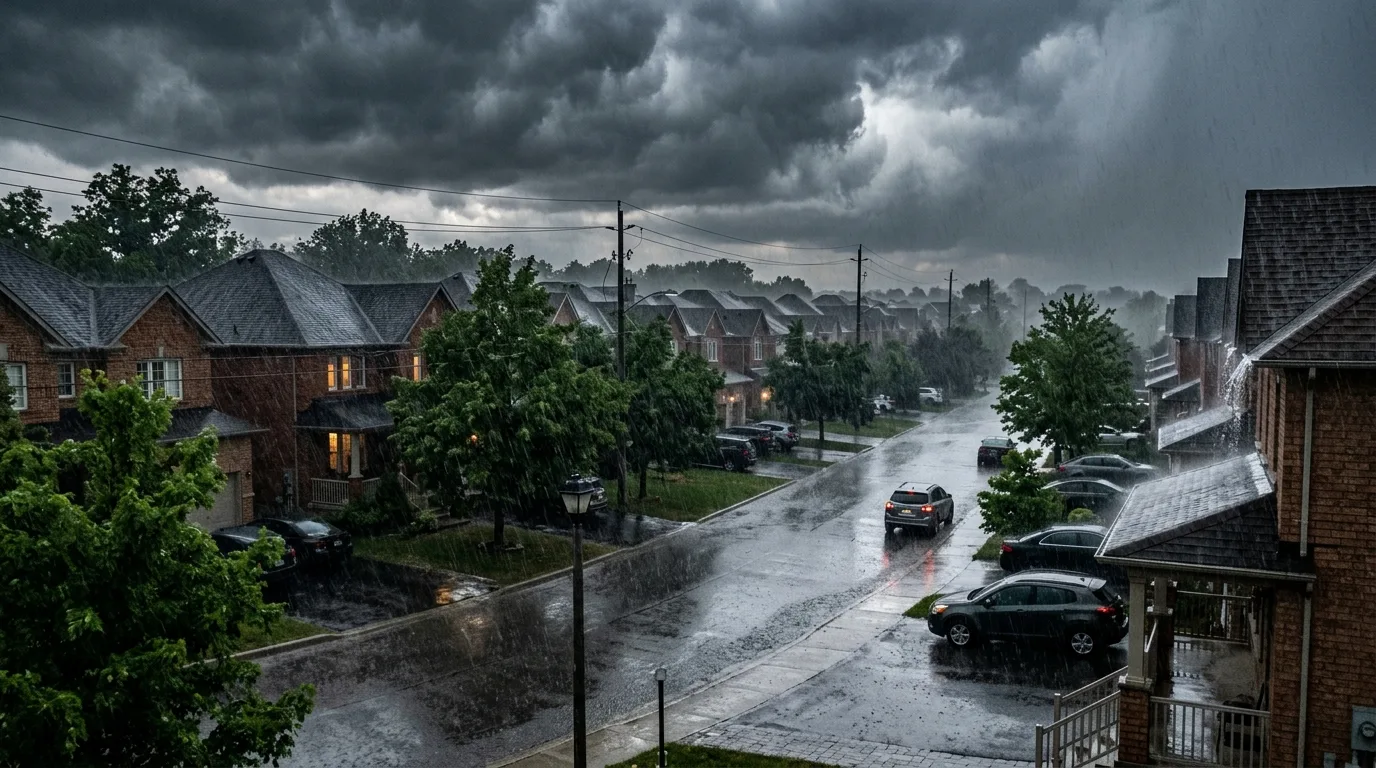
August 2024 proved what Saratoga Springs homeowners who’ve been here a decade already knew: summer monsoon storms in Utah County can arrive fast and overwhelm drainage systems that handle everything else the year throws at them. In this post, we cover how the Utah County monsoon pattern works, what makes certain properties more vulnerable to summer flash flooding, and the preparation steps that can prevent your home from becoming a water damage statistic.
Summer Flood Damage in Saratoga Springs? We Respond 24/7
Emergency water extraction and flood cleanup for Utah County summer storms. Call (877) 698-1311.
Why Summer Storms Create Flash Flood Risk in Saratoga Springs
Saratoga Springs’s classified as cold semi-arid (Köppen BSk), meaning it’s primarily dry. What makes it tricky is the North American Monsoon — a seasonal shift in moisture flow from the Gulf of Mexico and Gulf of California that creates the “monsoon season” from July through September. During this period, days that start clear and hot (July average high: 94°F) can end with dramatic afternoon thunderstorms that drop an inch or more of rain in under an hour.
The city’s hardpan soils and clay-rich Lake Bonneville deposits that underlie neighborhoods like Northshore and Wander don’t absorb water quickly — at maximum absorption rates, even moderately heavy rain produces more runoff than the soil can handle. When a monsoon cell drops an inch of rain in 45 minutes, essentially all of it becomes surface runoff simultaneously. Drainage systems designed for expected rainfall rates can be overwhelmed within minutes of a strong storm’s onset.
Property Features That Increase Summer Flood Risk
Low-elevation location: Homes in lower terrain relative to surrounding streets receive drainage flow from uphill properties in addition to their own direct precipitation. The lowest-elevation streets in Saratoga Springs effectively collect runoff from several adjacent uphill properties.
Inadequate window well drainage: Window wells that are sized to hold a few inches of water without draining become flood-entry points during intense rain. A single 45-minute monsoon storm can overwhelm an undersized window well in under 15 minutes.
Flat or negative grading: Finished grade around the foundation should slope away from the house at 1 inch per foot for the first 6 feet. Homes where settled soil has created flat or negative grade channels summer rain directly against foundation walls.
Undersized gutters: Standard 4-inch gutters are marginal for Utah County’s monsoon rain intensities. During a heavy monsoon cell, 4-inch gutters overflow and deposit water along the foundation at exactly the point where you least want it.
Clogged storm drains near the property: Municipal storm drain grates near your home that are clogged with debris will cause street flooding that rises to driveway and entry levels faster than homeowners expect.
Practical Preparation Steps Before Monsoon Season
-
Upgrade to 6-inch gutters before July. Six-inch gutters handle roughly twice the flow volume of standard 4-inch gutters and dramatically reduce overflow during intense monsoon rain events.
-
Install window well covers. Bubble covers over basement window wells prevent rain entry entirely — the most effective single intervention for preventing summer basement flooding in Saratoga Springs.
-
Clear storm drain grates near your property. Debris accumulates on storm drain grates throughout spring and early summer. Clear all grates on the street adjacent to your property before monsoon season begins in July.
-
Confirm sump pump capacity and backup. A sump pump that was adequate for spring snowmelt may be insufficient for a rapidly developing monsoon flood. Know your pump’s gallons-per-hour rating and confirm it has a battery backup for power outages that often accompany severe storms.
-
Grade soil away from the foundation. If you notice settled soil along your foundation, add topsoil to restore positive drainage slope away from the house before summer storms arrive.
-
Know the flood risk of your specific location. Check the FEMA flood map for your Saratoga Springs address — properties near Utah Lake may have different risk profiles than those further from the lake. Contact the city’s engineering department for information about storm drainage design in your specific neighborhood.
Summer Storm Ready Your Saratoga Springs Home Now
Prevention is cheaper than restoration. Call us for a free drainage and flood risk assessment for your Utah County home. (877) 698-1311.
Types of Summer Water Damage in Saratoga Springs
Window well flooding: The most common summer water damage entry point in Saratoga Springs. When window well capacity is exceeded, water enters at the window sill and flows directly into the basement, often before the homeowner is aware of the storm’s intensity.
Garage flooding: Garage doors provide minimal weather sealing, and sloped driveways can channel surface runoff into garages during intense storms. Stored property and mechanical systems are frequently damaged.
Foundation wall intrusion: Intense rain on already-saturated clay soils creates rapid hydrostatic pressure that forces water through existing foundation cracks and around window frames faster than in slow-accumulation spring flooding.
Flash flood from adjacent drainage areas: In some parts of Saratoga Springs, engineered drainage channels are designed to handle significant flows from uphill areas. During extreme events, these channels can exceed capacity and overflow into adjacent properties.
Roof overflow at valleys and transitions: Monsoon rain intensity can exceed the drainage capacity of roof valleys, gutters, and transitions, causing water to back up under shingles and into attic spaces.
Process for Handling Summer Flood Damage
The process for handling summer flash flood damage in Saratoga Springs follows the same sequence as spring flooding: document immediately, turn off electricity to affected areas before entering standing water, extract water as quickly as possible, and deploy professional drying equipment. See our complete flood damage cleanup services for what professional flood response involves.
The one difference with summer events is the water classification concern. Summer flood water that enters from outside — through window wells, garage doors, or foundation cracks — is classified differently from clean water from an internal source. Outdoor flood water carries soil contaminants, bacteria, and potential sewage contact that may require more extensive sanitization protocols.
Cost Factors for Summer Storm Flood Cleanup
Summer monsoon flood damage costs follow the same ranges as spring flooding: $500 for quickly-addressed minor events to $10,000+ for major basement flooding. Summer flooding often involves Category 2 or 3 water classification when outdoor floodwater is involved, which adds sanitization requirements and increases remediation cost compared to clean-water events.
For accurate cost expectations, see our water damage restoration cost guide for Saratoga Springs.
Frequently Asked Questions
Does homeowners insurance cover summer flash flood damage in Saratoga Springs?
Surface water flooding from outside the home — including water that enters through window wells, foundation cracks, or at grade level during a storm — is typically classified as flood damage, which is NOT covered by standard homeowners insurance. Only a separate National Flood Insurance Program (NFIP) policy or private flood insurance covers this event type. Contact your insurer before assuming coverage applies. See our guide on what homeowners insurance covers in Utah for a comprehensive breakdown.
How quickly do summer storms develop in Utah County?
Monsoon storms in Utah County can develop from clear skies to heavy rain in under 30 minutes. This is faster than most homeowners expect, which means preparation must be done before storm season, not during it. The National Weather Service regularly issues flash flood watches for Utah County during July–September — signing up for alerts is worthwhile.
Which neighborhoods in Saratoga Springs are most at risk for summer flash flooding?
Lower-elevation neighborhoods near Utah Lake — Northshore, Wander — face elevated risk from both direct flooding and groundwater. Streets at the base of grading systems that collect runoff from multiple uphill properties are particularly vulnerable. The city’s engineering department can provide information about storm drainage design in specific subdivisions.
Summer Storm Damage? We Respond Across Utah County
Emergency flood cleanup for Saratoga Springs, Lehi, Eagle Mountain, American Fork, and all of Utah County. Call (877) 698-1311.
Related: