How to Choose a Water Damage Restoration Company in Saratoga Springs
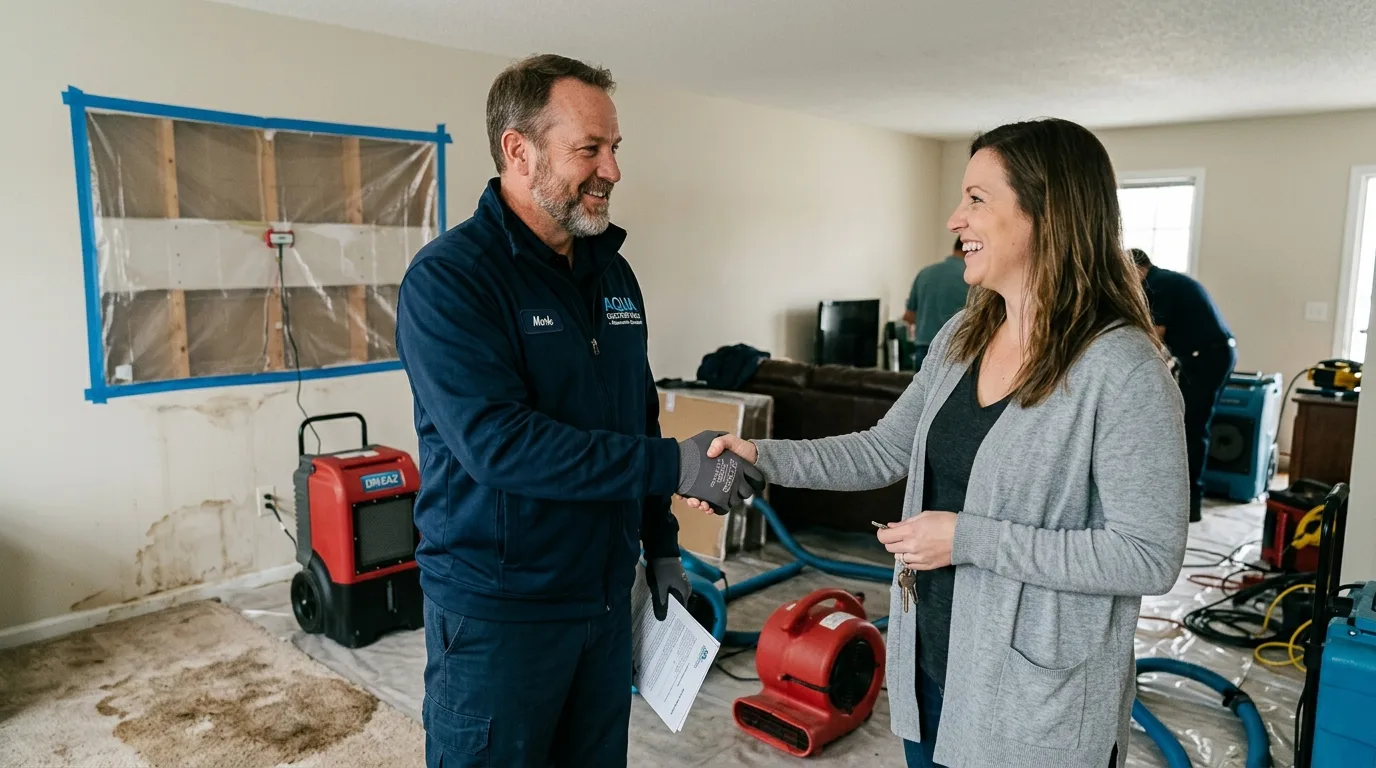
When water is rising in your basement at 11 p.m. on a Tuesday in February, your ability to evaluate contractors critically is significantly impaired. The best time to think about how to choose a water damage restoration company in Saratoga Springs is before you need one — ideally right now, before the next freeze-thaw cycle or spring snowmelt puts you in the position of making a thousands-of-dollars decision under time pressure. In this guide, we cover what credentials actually matter, the questions that reveal competence from inexperience, the red flags that appear consistently with problematic contractors, and what the process should look like from the homeowner’s perspective.
Saratoga Springs Water Damage Restoration — Credentials, Experience, 24/7 Response
Call (877) 698-1311 for a free assessment from a certified, licensed Utah County restoration team.
Credential 1: IICRC Certification
The Institute of Inspection, Cleaning and Restoration Certification sets the professional standard for water damage restoration. Ask any contractor about their IICRC certifications:
Water Restoration Technician (WRT): The foundational certification for water damage work. Any technician who enters your home should hold this credential or work under the supervision of someone who does.
Applied Structural Drying Technician (ASD): Specifically addresses the science of drying structural materials using industrial equipment. Critical for any job that requires structural drying rather than just extraction.
Applied Microbial Remediation Technician (AMRT): Required for any job involving mold — either established mold or situations where mold risk is elevated (Category 2/3 water events, delayed response).
Ask to see certificates or verify credentials at the IICRC’s online directory. Any contractor who cannot provide verification should not be engaged for water damage work.
Credential 2: Proper Licensing and Insurance
Utah does not require a specific “water damage restoration license,” but any contractor performing structural repairs and reconstruction must be licensed as a contractor in Utah. Ask for:
- Utah contractor license number (verify at the Utah Division of Occupational and Professional Licensing)
- General liability insurance certificate — minimum $1 million
- Workers’ compensation insurance — confirms employees are covered if injured at your property
A contractor who cannot immediately provide these documents or who asks for time to “get them together” is not operating compliantly. Move on.
Credential 3: Insurance Claim Experience
Working on water damage restoration claims in Utah County is a specific skill set. Ask:
- Do you produce estimates in Xactimate format? (Industry standard that insurance carriers use — critical for seamless claim processing)
- Do you work directly with insurance adjusters?
- Have you worked with [your specific carrier] before?
- Do you provide daily moisture documentation suitable for insurance submission?
Insurance-savvy contractors reduce friction in the claim process and help you get full coverage for legitimate losses. Contractors unfamiliar with claim documentation create delays and disputes that frustrate homeowners.
The Questions That Reveal Competence
“What moisture readings do you target before reconstruction begins?”
A competent answer references industry standards — IICRC S500 guidelines, typically targeting moisture content in wood below 15–19% and in drywall below 1%. A vague answer (“until it’s dry”) or a timeline-based answer (“three days”) reveals a contractor who makes decisions by feel rather than by calibrated measurement.
“Do you use thermal imaging cameras for moisture detection?”
In Saratoga Springs, where Lake Bonneville clay soils introduce moisture into structural materials in ways that surface meters miss, thermal imaging cameras are standard professional equipment. A contractor without this tool cannot reliably find all affected areas, which means moisture gets sealed inside wall cavities during reconstruction.
Get a Free Assessment from Saratoga Springs's Certified Restoration Team
IICRC-certified, insurance-experienced, and available 24/7 throughout Utah County. Call (877) 698-1311.
“How do you handle permit requirements for reconstruction in Saratoga Springs?”
The correct answer acknowledges that structural repairs after water damage require permits from the Saratoga Springs Building Department through the city’s paperless portal, and confirms the contractor manages that process. A contractor who says “we don’t need permits for this kind of work” is either wrong about the requirements or planning to skip them — both create problems for you when you sell the property.
“What’s your response time for a 2 a.m. emergency in Saratoga Springs?”
You want a committed answer with a specific time window, not a general assurance of 24/7 availability. A contractor who has genuine 24/7 capacity will tell you “we can have a team on-site within 90 minutes.” A contractor who redirects to “we’ll call you back first thing in the morning” is not actually available for the type of emergency where minutes matter.
Red Flags to Watch For
Door-to-door solicitation after a storm: Legitimate restoration contractors get their work through referrals and direct calls. Contractors who show up at your door immediately after a flooding event in Saratoga Springs are often out-of-area companies that followed a storm looking for quick contracts — they may not be familiar with Utah County’s specific conditions, permit requirements, or local insurance carrier relationships.
Requests for large upfront payment: A reasonable mobilization deposit (10–20%) is normal. Requests for 50%+ upfront before any work begins are a significant red flag. Payment should scale with work completion, with final payment after satisfactory completion.
Pressure to sign a work authorization immediately: Legitimate companies explain the situation, show you their scope, and give you reasonable time to decide. Contractors who pressure immediate signature — particularly after hours — should be viewed with skepticism.
Inability to provide written scope before starting work: Before any work begins on your Saratoga Springs home, you should receive a written scope of loss describing what work will be done, how long it will take, and what it will cost. Vague verbal commitments lead to scope disputes and unexpected bills.
Equipment that doesn’t match the scale of the job: One residential dehumidifier and a couple of fans is not adequate equipment for a flooded basement. Professional water damage restoration uses industrial equipment — ask the contractor what equipment they plan to deploy and confirm it’s appropriate for your situation.
What the Process Should Look Like
Step 1 — Emergency response: Team arrives with extraction and drying equipment. Water is removed, affected areas are assessed with moisture meters and thermal imaging, and immediate drying equipment is placed.
Step 2 — Documentation: Photographs, moisture readings, and preliminary scope of loss are compiled. Insurance carrier is notified. All documentation meets insurer requirements.
Step 3 — Drying monitoring: Team returns daily to check moisture levels, reposition equipment, and provide progress reports. Target moisture levels confirmed by calibrated instrument readings.
Step 4 — Material decisions: Based on moisture readings and water classification, decisions are made about which materials can be retained versus must be removed. Any material removal decisions are documented for your insurance claim.
Step 5 — Reconstruction: After drying is confirmed complete, reconstruction begins — drywall, flooring, insulation, trim, paint. Permits are pulled for any work requiring them. Saratoga Springs’s Building Department portal handles all submittals.
Step 6 — Final inspection and documentation: Completed work is documented with photos and final moisture readings confirming the restoration is complete.
Frequently Asked Questions
Should I call my insurance company before calling a restoration contractor in Saratoga Springs?
Call the restoration contractor first — emergency stabilization should begin immediately to prevent escalating damage. Notify your insurer within a few hours of the initial call, but don’t delay extraction and drying waiting for insurance authorization. Most Utah County policies cover emergency services explicitly, and insurers expect homeowners to mitigate damage promptly.
What if my insurance company recommends a specific contractor?
Your insurer has preferred vendors, but you are legally entitled to choose your own contractor in Utah. Insurer-preferred vendors have a financial relationship with the carrier that may affect how they balance your interests against the carrier’s. You can use any licensed, certified contractor you choose. If you use an insurer-recommended contractor, their estimate still goes through the same adjuster review process as a contractor you selected independently.
How do I compare quotes from multiple Saratoga Springs restoration contractors?
Compare scope, not just price. A lower-priced quote that uses fewer drying days or skips material removal that Category 2 water requires isn’t actually less expensive — it’s a risk that mold will develop and require remediation that costs more than the savings. Compare written scopes line by line, confirm that drying protocols follow IICRC S500, and verify that material removal decisions are based on water classification rather than cost minimization.
Choose Certified, Experienced, Honest Restoration in Saratoga Springs
Saratoga Springs Water Damage Restoration — IICRC-certified, insurance-experienced, available 24/7. Call (877) 698-1311.
Related:
- Water Damage Restoration Services in Saratoga Springs
- Does Homeowners Insurance Cover Water Damage in Utah?
- The Cost of Water Damage Restoration in Saratoga Springs (2026 Pricing)
- Category 1, 2, 3 Water Damage: What Saratoga Springs Homeowners Should Know
- Spring Snowmelt Flooding in Saratoga Springs: What Homeowners Need to Know